
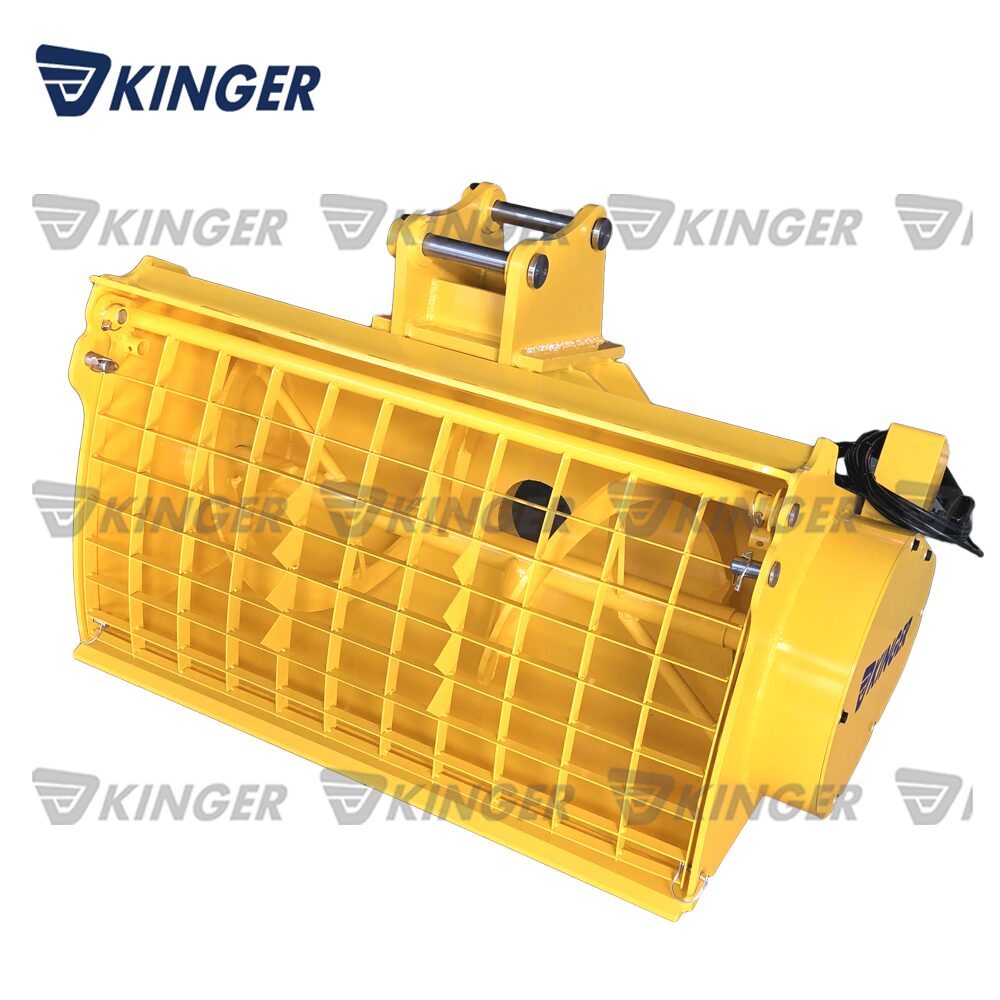
This detailed reference page is designed for buyers, importers, distributors and B2B sourcing managers searching for
hydraulic skid steer attachment manufacturers, suppliers and factory listings. It focuses on
industry‑wide information instead of promoting specific brands, helping you understand product definitions,
specifications, advantages, applications and sourcing criteria in a neutral and SEO‑friendly format.
A hydraulic skid steer attachment is a work tool that connects to the front quick‑attach
plate of a skid steer loader or compact track loader and is powered by the machine’s auxiliary hydraulic
system. Unlike simple mechanical buckets or forks, these attachments require hydraulic flow and pressure to
operate cylinders, motors or other hydraulic components.
Hydraulic skid steer attachments transform a basic skid steer loader into a multi‑purpose machine for
digging, cutting, drilling, trenching, lifting, mixing, compacting and demolition. For B2B
buyers, the category of hydraulic skid steer attachments is critical because it represents a large and
profitable aftermarket with diverse product types and specification levels.
In factory listings and supplier catalogs, hydraulic skid steer attachments are often grouped by:
Hydraulic skid steer attachments provide several advantages for equipment owners, rental fleets, dealers,
distributors and contractors. Best‑rated manufacturers and suppliers emphasize the following benefits in
their product lines and catalogs:
A single skid steer loader equipped with different hydraulic attachments can perform tasks usually handled by
many specialized machines. This improves machine utilization and reduces capital expenditure for end users.
Hydraulic power enables higher torque, faster cycle times and more consistent performance than purely
mechanical attachments. When matched correctly to the skid steer’s auxiliary hydraulic system, a hydraulic
skid steer attachment can significantly increase productivity in demanding environments.
Hydraulic valves, flow control and proportional controls allow operators to adjust speed and torque for
precise operation. This is important in applications like trenching, auger drilling, concrete planing and
landscape work, where accurate depth and alignment are required.
Many hydraulic attachments replace manual tools or reduce the need for additional labor. For example,
hydraulic brooms clean surfaces faster than manual sweeping, and hydraulic breakers remove concrete or rock
more efficiently than hand‑held breakers.
For distributors and rental companies, offering a wide portfolio of hydraulic skid steer attachments can
generate recurring rental and replacement sales. Durable designs with interchangeable wear parts, rebuild
kits and service support help extend service life and lower total cost of ownership.
Factory listings for hydraulic skid steer attachments usually categorize products by
function. Below is an overview of widely used attachment types that appear in manufacturer and supplier
catalogs worldwide.
Hydraulic augers are used for drilling holes in soil, clay and some rock formations. They are common in
fencing, landscaping, utility installation and foundation work. The skid steer’s hydraulic flow drives a
planetary or direct‑drive motor connected to the auger bit.
Hydraulic breakers (also called hydraulic hammers) are used for demolishing concrete, rock and asphalt. They
use high‑pressure hydraulic oil to drive an internal piston that delivers impact blows to a tool bit. Breaker
size must match carrier weight, hydraulic flow and pressure.
Grapple attachments (grapple buckets, root grapples, scrap grapples) incorporate hydraulic cylinders to open
and close claws or grappling arms. They are widely used in forestry, recycling, demolition, agriculture and
waste handling.
Hydraulic sweepers use a hydraulic motor to rotate a broom core with poly or wire bristles. Variants include
angle brooms, pickup brooms and closed‑front sweepers. Typical applications include road cleanup, construction
site maintenance and snow removal.
Snow blowers for skid steer loaders use hydraulic motors to drive an auger and impeller. Adjustable chute and
deflector functions may also be hydraulically controlled. These attachments are important in municipal,
airport, commercial property and road maintenance applications.
Hydraulic trenching attachments cut narrow trenches for utilities, irrigation and cable installation. They
typically include a hydraulic motor driving a chain with cutting teeth, along with a spoil auger and depth
control features.
Skid steer brush cutters, flail mowers and forestry mulchers are high‑demand hydraulic attachments used for
vegetation management. They require careful matching of hydraulic flow and pressure to ensure blade speed and
torque suitable for heavy brush or trees.
4‑in‑1 buckets operate using hydraulic cylinders to open and close the bucket clam, allowing the attachment to
function as a dozer blade, scraper, grapple and standard bucket. Tilt buckets use hydraulics to angle the
bucket left and right for fine grading and slope work.
Cold planers are hydraulic skid steer attachments used to mill asphalt or concrete. They use high‑torque
motors, drum assemblies and replaceable cutting teeth. Additional roadwork tools include hydraulic compactors
and wheel saws.
In addition to the categories above, factory catalogs may list hydraulic skid steer attachments such as:
Best‑rated manufacturers and suppliers of hydraulic skid steer attachments design their
products for multiple industries and work environments. Below is an overview of applications usually
highlighted in product brochures and factory listings.
| Industry / Sector | Typical Hydraulic Skid Steer Attachments Used | Main Tasks |
|---|---|---|
| Construction & Civil Engineering | Augers, breakers, trenchers, cold planers, 4‑in‑1 buckets, compactors | Excavation, foundation work, trenching, demolition, road repair |
| Landscaping & Grounds Maintenance | Brush cutters, augers, tillers, landscape rakes, grapple buckets | Soil preparation, planting, grading, debris removal, land clearing |
| Forestry & Land Clearing | Forestry mulchers, stump grinders, grapples, tree spades | Vegetation management, tree removal, biomass reduction |
| Agriculture & Livestock | Grapple buckets, bale spears (with hydraulic clamps), augers, trenchers | Material handling, fencing, drainage, farm maintenance |
| Municipal & Public Works | Sweepers, snow blowers, salt spreaders, cold planers, mowers | Street cleaning, snow control, roadside maintenance, repair |
| Recycling & Scrap Yards | Scrap grapples, industrial buckets, compactors | Sorting, loading, handling bulk scrap and waste |
| Rental Equipment Fleets | General purpose hydraulic attachments for multi‑customer use | Short‑term rental for construction, landscaping, municipal work |
When browsing factory listings or supplier catalogs for hydraulic skid steer attachments, buyers should pay
close attention to technical specifications. These parameters ensure correct matching between the attachment
and the skid steer loader’s capabilities.
| Specification Item | Typical Description | Importance for Buyers |
|---|---|---|
| Attachment Category | Auger, breaker, broom, trencher, mower, etc. | Determines application range and target user group |
| Compatible Carrier | Skid steer, compact track loader, wheel loader | Ensures mechanical fit and operating safety |
| Mounting System | Universal skid steer quick attach, proprietary plate, adapter | Determines cross‑brand compatibility and fleet flexibility |
| Operating Weight | Attachment weight in kg or lbs | Affects machine stability, transport and lifting limits |
| Overall Dimensions | Length, width, height | Important for storage, transport and working envelope |
| Hydraulic Flow Range | Minimum and maximum gpm or L/min | Must lie within the skid steer’s auxiliary flow capacity |
| Hydraulic Pressure Range | Operating pressure in bar or psi | Must match machine system pressure for efficient performance |
| Required Case Drain | Yes / No, recommended line size | Critical for high‑speed hydraulic motors and protection |
| Power or Torque Output | kW / hp, Nm / ft‑lb (for augers, planers, etc.) | Indicates ability to drive tools under load |
| Working Capacity | Drilling diameter, cut width, sweep width, etc. | Directly linked to productivity |
| Recommended Carrier Size | Machine weight / power class | Prevents under‑ or over‑sizing attachments |
Below is an example of how a hydraulic skid steer auger attachment might be presented in a factory listing.
| Model | Hydraulic Flow Range (L/min) | Operating Pressure (bar) | Output Torque (Nm) | Recommended Hole Diameter (mm) | Approx. Weight (kg) |
|---|---|---|---|---|---|
| Light‑Duty Auger Head | 30 – 60 | 140 – 210 | 800 – 1500 | 100 – 350 | 90 – 120 |
| Standard‑Duty Auger Head | 50 – 90 | 170 – 230 | 1500 – 3500 | 150 – 600 | 150 – 220 |
| Heavy‑Duty Auger Head | 80 – 130 | 180 – 250 | 3500 – 7000 | 200 – 900 | 220 – 350 |
| Breaker Size Class | Tool Diameter (mm) | Impact Rate (bpm) | Oil Flow (L/min) | Working Pressure (bar) | Approx. Weight (kg) | Recommended Carrier Weight (t) |
|---|---|---|---|---|---|---|
| Small | 50 – 70 | 700 – 1200 | 25 – 45 | 90 – 130 | 120 – 250 | 1.5 – 4.0 |
| Medium | 70 – 90 | 500 – 900 | 40 – 80 | 110 – 150 | 250 – 550 | 3.5 – 8.0 |
| Large | 90 – 120 | 400 – 700 | 70 – 120 | 130 – 170 | 550 – 1100 | 7.0 – 15.0 |
Matching a hydraulic skid steer attachment to a particular loader involves more than
mechanical connection. Correct hydraulic compatibility is essential for safe, efficient operation and to
prevent damage to both attachment and carrier.
Standard Flow Systems: Typically range from 45 to 90 L/min (12–24 gpm) at approximately
200–230 bar (2900–3300 psi). Many general-purpose hydraulic skid steer attachments (grapples, angle
brooms, small augers) are compatible with standard flow.
High Flow Systems: Provide higher flow, often 90–150+ L/min (24–40+ gpm), sometimes at
similar pressure. High flow is critical for cold planers, large mulchers, heavy‑duty trenchers and
high‑capacity snow blowers.
Most hydraulic skid steer attachments use quick couplers that interface with the machine’s auxiliary ports.
Buyers should verify:
When the attachment’s specified flow range and operating pressure do not match the carrier’s hydraulic
performance, issues may include:
Best‑rated manufacturers typically provide detailed hydraulic charts, recommended carrier models and
configuration notes in their catalogs to help avoid mismatches.
High‑quality hydraulic skid steer attachment manufacturers focus heavily on material
selection, structural design and surface treatment processes to ensure long service life under severe working
conditions.
wear plates
Leading suppliers use standardized welding procedures and qualified welders. Common methods include MIG/MAG
welding with controlled heat input for reduced distortion. Robotic welding systems are often used for high
volume attachment production to ensure repeatable weld quality.
Buyers using international hydraulic skid steer attachment factory listings often require
evidence of quality management systems and compliance with safety standards. While specific certifications
differ by region, several elements are common across best‑rated manufacturers.
Reputable manufacturers may perform:
Online and offline factory listings help buyers quickly identify manufacturers and
suppliers of hydraulic skid steer attachments. These listings can be in the form of industrial directories,
B2B platforms or sector‑specific catalogs.
| Listing Element | Description | Use for Buyers |
|---|---|---|
| Company Profile | Short overview of the manufacturer or supplier, including main product categories | Initial evaluation of capability and specialization |
| Product Range | List or catalog of hydraulic skid steer attachments offered | Check whether the supplier covers required attachment types |
| Production Capacity | Annual output in units or sets | Assess ability to handle large or repeat orders |
| Export Markets | Regions or countries where products are sold | Reference for international experience and compliance |
| Customization Capability | OEM / ODM services, private label options | Key for brand owners and distributors |
| Quality Certifications | Information on standards and systems implemented | Check alignment with customer or market requirements |
| Lead Time | Typical delivery cycles for samples and bulk orders | Planning of inventory and project schedules |
| Contact Channels | Email, phone, website, online inquiry forms | Direct communication for quotations and technical support |
Buyers should filter hydraulic skid steer attachment factory listings by:
Many hydraulic skid steer attachment factories provide OEM (Original Equipment Manufacturer)
and ODM (Original Design Manufacturer) services. These models are especially important for
distributors, private‑label brands and equipment dealers.
Under OEM cooperation, the manufacturer produces hydraulic skid steer attachments based on existing designs,
but labels them with the buyer’s logo, colors and packaging.
With ODM cooperation, the manufacturer participates more actively in design and engineering. This may include:
Selecting reliable hydraulic skid steer attachment manufacturers and suppliers is crucial for
long‑term business cooperation. Without listing specific companies, the following criteria can be used as a
checklist when reviewing factory listings and conducting supplier audits.
Hydraulic skid steer attachments are heavy and often bulky, so proper packaging and logistics planning are
essential for safe international transport and efficient distribution.
For overseas shipments of hydraulic skid steer attachments, factories typically aim to:
For end users and dealers, maintenance and safety are crucial considerations when selecting hydraulic skid
steer attachments. Factories and suppliers generally provide detailed instructions and schedules to maximize
service life.
Buyers should prepare details about the target skid steer models (brand, series, hydraulic flow and
pressure), required attachment types, approximate annual purchase volume, preferred markets, and any
customization or branding requirements. Providing project applications and typical working conditions (soil
type, climate, duty cycle) helps manufacturers recommend the most suitable hydraulic skid steer attachments.
Compare them by technical specifications, production capacity, engineering capability, quality control
systems, lead times, warranty terms and after‑sales support rather than marketing materials. Request standard
documentation, sample test reports and, if possible, arrange video audits or third‑party factory inspections.
Although engine horsepower is important, the performance of hydraulic skid steer attachments primarily
depends on the hydraulic flow (L/min or gpm) and pressure (bar or psi) delivered to the attachment. Flow
determines speed, and pressure contributes to torque or breakout force. Attachments are optimized for certain
hydraulic ranges, so flow and pressure must be matched correctly for safe and efficient operation.
Common documents include packing list, commercial invoice, product specification sheet, operating and
maintenance manual, parts list, warranty statement and any required compliance or inspection certificates for
the destination market. For large orders, suppliers may also provide serial number lists and pre‑delivery
inspection records.
Service life varies depending on the attachment type, working conditions, duty cycle and maintenance quality.
Structural components can often last for many years, while consumable parts such as teeth, blades and
hydraulic hoses require periodic replacement. Best‑rated manufacturers design attachments with replaceable
wear parts and offer rebuild kits for major components, extending overall life.
Many hydraulic skid steer attachments are designed with a universal quick‑attach interface, allowing them to
fit multiple skid steer brands. However, because hydraulic flow and pressure vary among machines, it is
essential to verify compatibility for each carrier. Some manufacturers offer different motor or valve
configurations to match various hydraulic systems.
Lead times depend on the supplier’s production schedule, level of customization and order volume. Standard
models may be available from stock or within several weeks, while customized OEM / ODM attachments may
require longer design, sampling and testing phases. Buyers should confirm lead times during negotiation and
incorporate them into project planning and inventory management.
This page provides a comprehensive, brand‑neutral overview of the hydraulic skid steer attachment
industry, supporting manufacturers, suppliers and buyers in creating or evaluating high‑quality factory
listings. By understanding definitions, advantages, technical specifications, hydraulic requirements,
materials, quality control and typical OEM / ODM models, stakeholders can improve communication, reduce
sourcing risks and develop stronger long‑term partnerships in the global hydraulic skid steer attachment
market.
```
Ce site Web utilise des cookies pour vous garantir la meilleure expérience sur notre site Web.


 English
 Español
 Portugues
 Italiano
 Nederlands
 Polski
 Română
 lietuvių
 Hrvatski



 WhatsApp
 Téléphone
Commentaire
(0)